EDAR8 Workshop: Expert elicitation for a risk assessment of environmental AMR across water and reuse systems using Bayesian Networks
Session 5.1C | Friday 7th August | 9:00am-10:30am | Room B3
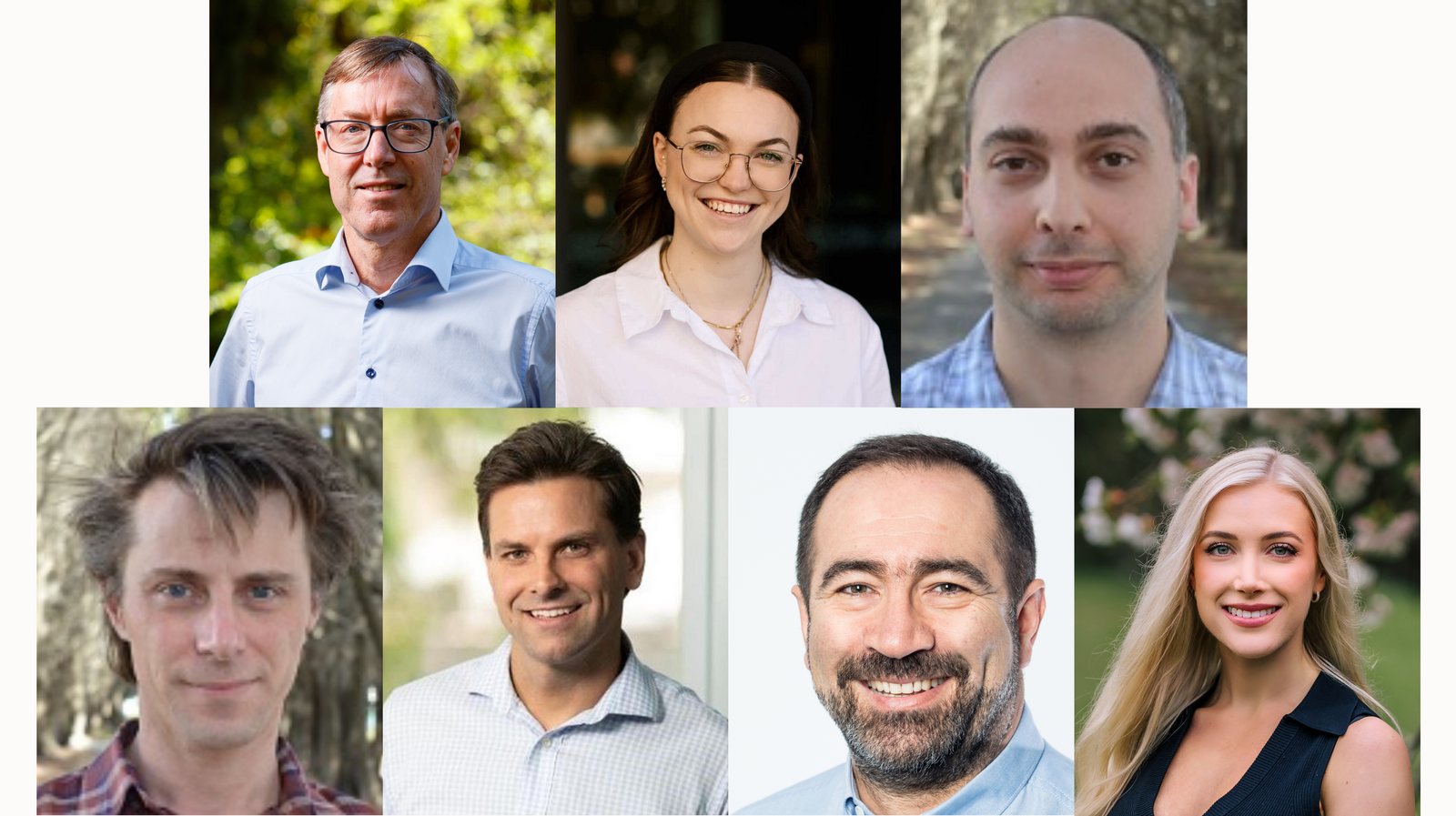
Facilitators: Prof. Nicholas Ashbolt, Dr Claire Hayward, Dr Steven Mascaro, Dr Owen Woodberry, A/Prof. Ben van den Akker, Dr Oz Sahin, Stephanie Faulks
Aims: To elicit expert judgement on plausible parameter values, ranges, and structural assumptions for key uncertain nodes in an environmental AMR Bayesian Network model.
Background: Water plays a central role in AMR emergence and movement, yet quantitative risk assessment remains difficult due to complex microbial interactions, variable system design, and scarce or siloed data on resistance dynamics under environmental stressors. Our project uses Bayesian Network modelling to map causal pathways of AMR emergence, persistence, and transmission through environmental pathways.
Workshop Participants and Activity: This workshop is designed for researchers and practitioners with hands-on expertise in one or more of the following areas:
- Molecular microbiology and genomics: horizontal gene transfer, mobile genetic elements, rank 1/2 resistance gene detection methods
- Environmental chemistry: chemical selection pressures, sub-inhibitory antibiotic concentrations, co-selecting contaminants, metals
- Microbial ecology and evolutionary biology: resistance selection mechanisms, fitness costs, stress response pathways
No specialist Bayesian modelling experience is required, facilitators will guide participants through the process, but attendees should be comfortable contributing expert judgement in their own technical area, including estimating plausible parameter ranges and discussing sources of uncertainty. Attendance at Dr Claire Hayward's Tuesday 4 August presentation ('Bayesian modelling to support water utilities in managing antimicrobial resistance risks', in Session 2.2C 11am–1pm) is mandatory pre-work for this workshop.
Participants will:
- Contribute directly to refining an environmental AMR Bayesian Network model through structured expert elicitation
- Help identify priority evidence gaps and operational/management levers influencing AMR persistence in water and reuse systems
- Gain practical exposure to how expert elicitation and Bayesian methods can be applied to complex environmental risk problems